
.png)



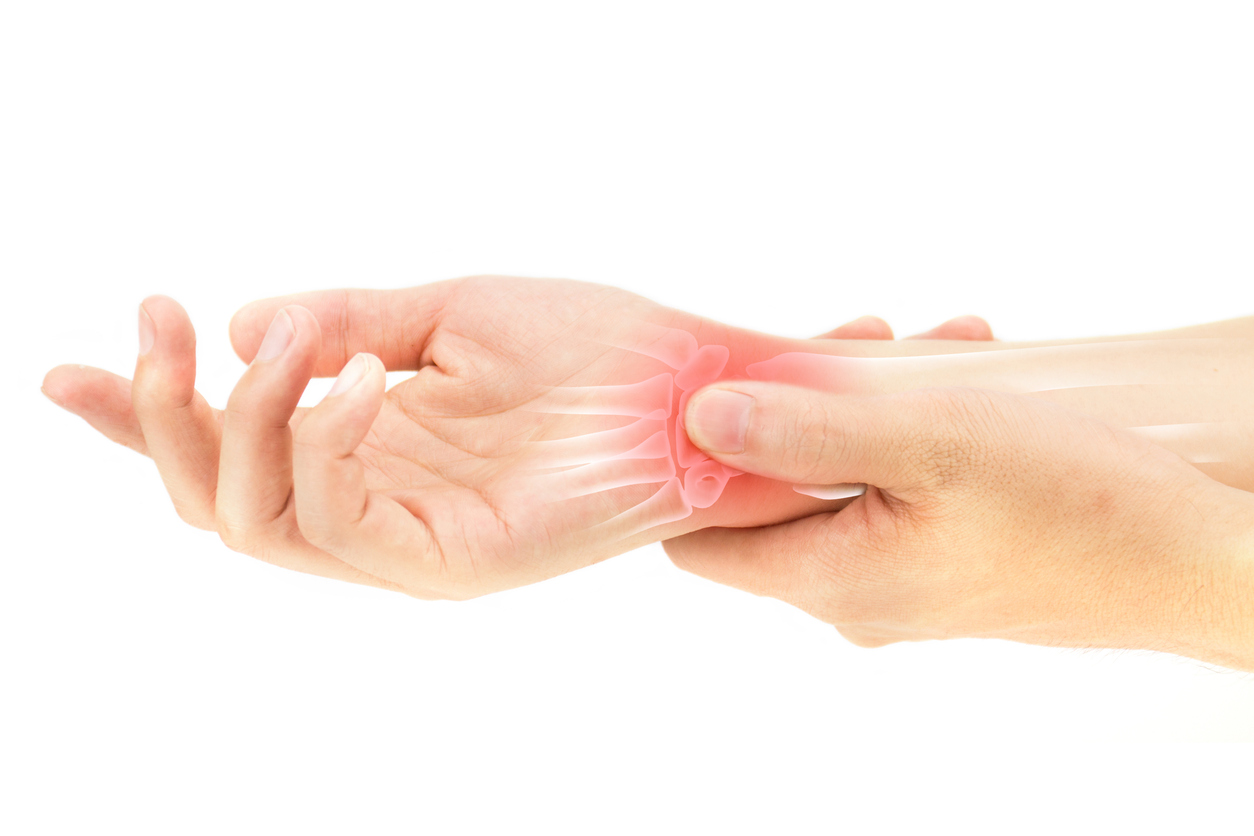

Opening a jar. Gripping a dumbbell. Working at a computer. Pushing yourself up from the floor.
Your wrists are involved in so much of daily life that you probably don’t think about them—until something hurts. Then even a small task can become frustrating.
For active Alaskans, wrist pain can also interfere with riding a bike, holding ski poles, fishing, or getting through a workout. The goal of care is to understand what is causing the problem and help your wrist handle the activities you want to keep doing.
Why does my wrist hurt?
“Wrist pain” describes a symptom. It doesn’t tell us which structure is involved or what treatment makes sense.
Pain may follow a fall or develop gradually. It may involve tendons, ligaments, joints, or nerves. Where it hurts, how it started, and what brings it on help guide the evaluation.
Tendon irritation and thumb-side pain
Tendons connect muscles to bones and help move your wrist and fingers. Some tendon problems cause pain with gripping, lifting, or repeated hand movements.
One example is de Quervain’s tenosynovitis, which affects tendons along the thumb side of the wrist. It can make lifting, grasping, and twisting uncomfortable. However, thumb-side pain alone doesn’t confirm that diagnosis; an examination helps distinguish it from other problems. AAOS
Sprains and injuries after a fall
A fall onto an outstretched hand can injure the wrist. What feels like a sprain may also involve a fracture.
The scaphoid, a small bone near the base of the thumb, is one important example. A fracture there can cause pain with grasping, pushing, or pulling. Persistent wrist pain after a fall deserves evaluation rather than repeated attempts to stretch or exercise it away. AAOS
Nerve irritation
Numbness, tingling, or altered sensation changes the conversation.
Carpal tunnel syndrome involves compression of the median nerve as it passes through the wrist. It can cause pain, numbness, and tingling in the hand and arm. Those symptoms require an assessment; they shouldn’t automatically be treated as tight muscles or a wrist that needs more stretching. orthoinfo.org
Joint-related pain and other causes
Arthritis and ganglion cysts are other possible sources of wrist symptoms. A lump, swelling, or stiffness provides useful information, but appearance alone doesn’t establish the cause.
The practical takeaway: two people with “wrist pain” may need very different plans. www.nhs.uk

Start with what your wrist needs to do
At Ascent, we want to know more than where the pain is.
Does it hurt when you grip? When your palm is flat on the floor? When you turn a doorknob? Does it wake you at night? Did it begin after an injury or a change in activity?
Those details help us connect the examination to your life.
Depending on your symptoms, we may assess wrist and forearm movement, grip strength, sensation, and how you tolerate specific tasks. We may also examine other parts of the arm when your history or findings suggest they are relevant.
We also consider whether imaging or a referral is needed. The right next step may be rehabilitation, additional medical evaluation, or a combination of both.
What can you do for mild wrist pain?
If symptoms are mild and there hasn’t been a concerning injury, a reasonable starting point is to reduce activities that repeatedly aggravate the wrist while keeping gentle, comfortable movement.
That could mean taking breaks from prolonged typing, reducing forceful gripping, or temporarily changing a task that consistently increases symptoms. A brace may help in some situations, but its usefulness depends on the problem. www.nhs.uk
For training, we look for ways to adjust the demand. Depending on the examination, that might involve changing the weight, grip, range of motion, or exercise.
A modification should make the activity more manageable. If every variation produces increasing pain, numbness, or weakness, it is time to reassess rather than keep experimenting.
Does wrist pain need stretching?
Sometimes mobility work belongs in the plan. Sometimes stretching aggravates the problem.
A wrist that is stiff may benefit from a different approach than a wrist with an acute injury or nerve symptoms. Even exercises used for a specific condition, such as carpal tunnel syndrome, should be selected with guidance rather than assumed to work for every painful wrist. orthoinfo.org

At Ascent, we use your response to guide progression. We want to know whether a movement becomes easier, whether you tolerate the exercise, and whether it helps you move toward your goals.
How treatment and rehabilitation fit together
Our integrated approach allows chiropractic and physical therapy care to contribute to a plan based on the findings.
For appropriate musculoskeletal problems, care may include hands-on treatment, activity modifications, and targeted rehabilitation. Hands-on care may be considered to help manage symptoms or address movement restrictions. We then reassess whether it is helping.
The rehabilitation plan connects that work to function. Depending on the condition, it may involve:
- Comfortable wrist and forearm movement.
- Gradually progressed grip and wrist strengthening.
- A return to pushing, pulling, lifting, or carrying.
- Changes to work tasks or training demands.
Not every wrist needs manipulation, and not every wrist problem belongs in conservative care alone. Suspected fractures, significant injuries, or progressive neurological symptoms require an appropriate medical pathway.
The question we keep returning to is practical: Is your wrist becoming more capable of doing what you need it to do?
When should wrist pain be evaluated?
Arrange an evaluation if wrist pain is limiting normal activities, keeps returning, is getting worse, or hasn’t improved after about two weeks of self-care. Tingling or changes in sensation also warrant assessment.
Seek prompt medical attention for severe pain, an obvious change in wrist shape or color, inability to move the wrist or hold objects, loss of sensation, or a hot, painful swelling—particularly if you also feel unwell. www.nhs.uk
After a fall, don’t assume that being able to move your wrist rules out a meaningful injury. Ongoing pain, especially near the base of the thumb, deserves attention. AAOS
Build toward a wrist you can use confidently
A useful treatment goal is specific: open the jar, carry the groceries, work comfortably, or return to the lifts and outdoor activities you enjoy.
At Ascent Health & Performance in Anchorage, we connect the diagnosis with those demands. That means understanding the problem, selecting care that fits, and progressing toward the movement and strength your daily life requires.