
.png)



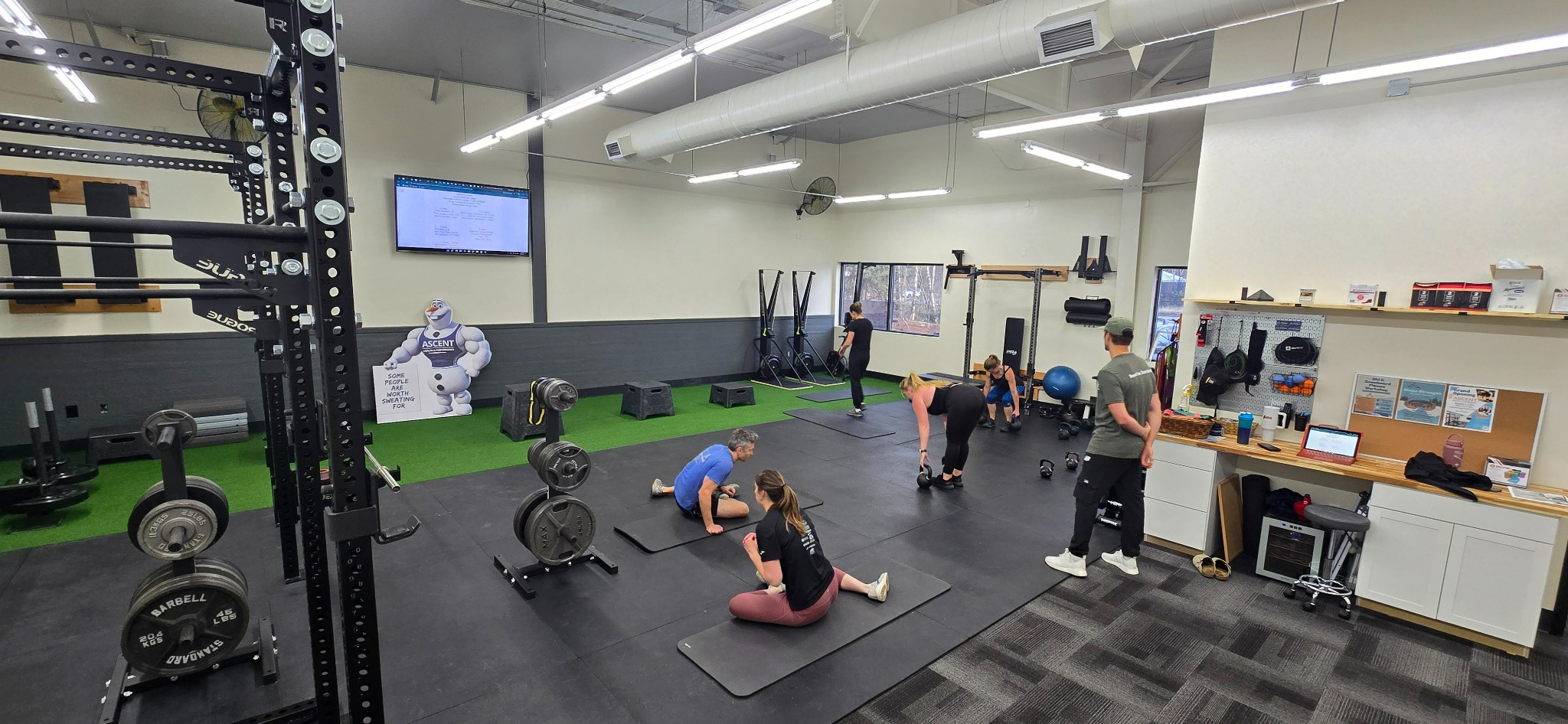

When we designed Ascent Health & Performance, putting a gym inside the clinic wasn't an afterthought.
It wasn't there because we had some extra space to fill. And it wasn't because we thought every patient needed to become a powerlifter.
We built it because there is a point in recovery when the treatment table isn't enough.
If our goal is simply to get someone through an episode of pain, we can accomplish a lot in a treatment room. But if the goal is to help someone get back to skiing, hiking, lifting, hunting, working, playing with their kids, or simply staying strong as they get older, eventually we have to ask more of the body.
At some point, rehabilitation has to become training.
And we wanted that transition built directly into Ascent.
Getting Out of Pain Is Only Part of the Job
Pain is often what brings someone through our doors.
Your back hurts when you bend over. Your shoulder doesn't tolerate reaching overhead. Your knee is keeping you off the trail. You strained something at the gym and can't train the way you normally do.
Early in care, our priorities may be fairly clinical: determine what we're dealing with, rule out concerns that need a different type of care, improve mobility, settle an irritated area, and start restoring comfortable movement.
But eventually the conversation changes.
Can your back tolerate lifting again?
Can your knee handle a long descent?
Can your shoulder control weight overhead?
Can you repeatedly produce and absorb force without the same problem returning?
Those aren't questions we can completely answer on a treatment table.
They're questions we answer by progressively asking the body to do more.
The Line Between Rehabilitation and Training Is Pretty Blurry
We tend to think of physical therapy or rehabilitation as one thing and strength training as something entirely different.
The body doesn't really recognize that distinction.
Imagine someone recovering from a knee problem.
Early on, a supported squat to a box may be an appropriate challenge. As capacity improves, that could become an unsupported squat, then a goblet squat, then a progressively heavier squat or split squat.
At what exact repetition did rehabilitation become strength training?
There isn't one.
The exercise didn't suddenly become bad because it got heavier. Increasing the challenge was the point.
The same thing happens with deadlifts, carries, rows, presses, step-ups, lunges and countless other movements. The appropriate exercise and dosage depend on the person in front of us and what we're trying to prepare them to do.
That's one reason our rehabilitation model progresses through mobility, stability, strength and eventually power when appropriate.
You don't need to turn every rehab patient into a competitive athlete. But you do need enough capacity to meet the demands of your life.
Strength Is Capacity
When people hear "strength training," it's easy to picture a barbell loaded with a pile of plates.
That's certainly one version of it—and we happen to like that version too.
But strength has a much broader purpose.
Strength is carrying your kids when they're tired.
It's putting your skis on the roof rack.
It's hauling hunting gear, pulling a sled, shoveling the driveway, carrying groceries up the stairs, hiking with a pack, getting yourself off the ground, or having enough reserve that an unexpectedly difficult day doesn't completely wipe you out.
For an athlete, strength can contribute to performance.
For someone coming out of rehabilitation, it can represent restored capacity.
For someone getting older, maintaining strength can be an important part of preserving physical function and independence.
The number on the bar is one way of measuring strength. What that strength allows you to do is why we care about it.
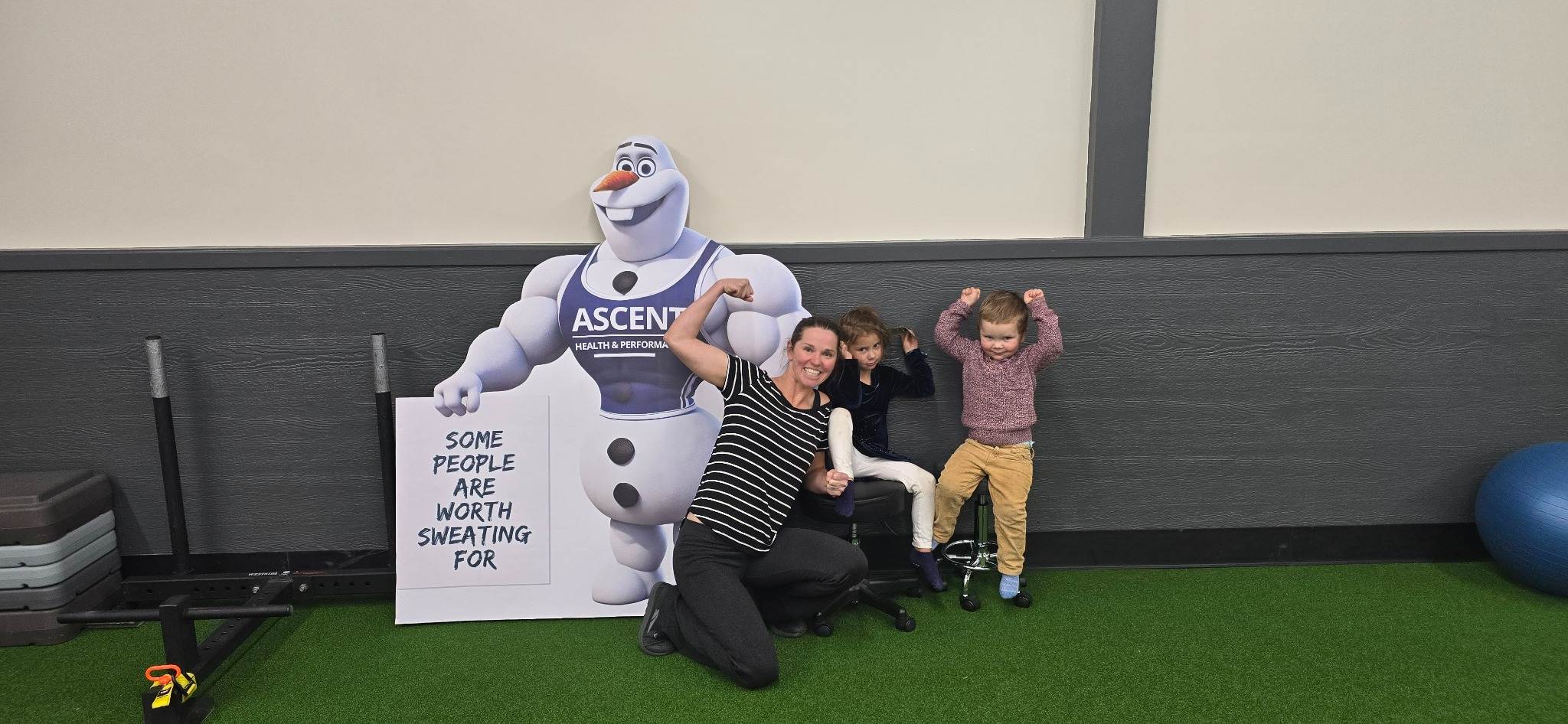
Strength isn't only about what you can lift in the gym. The bigger goal is having the physical capacity to keep showing up for the people and activities that matter to you.
Why Put the Gym Inside the Clinic?
This is where the physical layout of Ascent becomes part of our clinical philosophy.
We wanted less separation between treatment, rehabilitation and performance.
If someone is working with one of our chiropractors or physical therapists, we don't want rehabilitation limited by what fits next to a treatment table.
We can walk into the gym.
We can watch someone squat, hinge, carry, pull, press, run, jump or work through a movement that actually matters to them. We can increase load. We can change speed. We can introduce fatigue. We can see what happens when the task starts looking more like real life.
That gives us information.
It also gives us somewhere to go next.
Someone may start with chiropractic or physical therapy, progress into increasingly challenging rehabilitation, and eventually reach a point where they no longer need clinical care.
That's a success.
But it doesn't mean they have reached the end of what they can improve.
That's Where Coach Chris Comes In
One of the reasons we're able to make this model work is Coach Chris Peterson.
Chris has been an important part of building the training side of Ascent and helping create a bridge between rehabilitation and long-term strength and performance.
Sometimes that means taking over when someone has reached the point where they don't need a clinician supervising their progression anymore.
Sometimes it means working alongside our clinical team while someone is still navigating limitations.
And plenty of the people Chris coaches aren't patients at all. They simply want to get stronger, move better and train with some direction.
That's an important distinction.
You don't need to be hurt to train at Ascent.
Our gym exists partly because of our clinical model, but its purpose extends well beyond rehabilitation.
You Don't Need to Be "Fit Enough" to Start Strength Training
This is something I think keeps a lot of people out of gyms.
They feel like they need to get into shape before they join one.
That's backwards.
Training is how you build the capacity you don't have yet.
The appropriate starting point for someone who hasn't strength trained in 20 years will obviously look different from the starting point for someone chasing a 500-pound squat. Both can train.
A good training environment should be able to adjust the exercise, load, range of motion and complexity to meet the person where they are—and then gradually move the target.
That's also why coached training matters.
The goal isn't to make every workout as hard as possible. It's to apply an appropriate challenge consistently enough that your body has a reason to adapt.
Performance Lab: Training Together Without Everyone Doing the Same Thing
Our Performance Lab classes grew naturally out of that idea.
We wanted small-group training that still allowed for coaching and individual modification.
People in the same class may have very different training histories, goals and abilities. One person may be returning to heavier lifting after an injury. Someone else may be trying to build their first real foundation of strength. Another may be training specifically to perform better outside the gym.
They don't necessarily need identical loads or identical progressions.
They do benefit from a structured program, coaching, consistency and a group of people working toward the same general goal:
becoming more capable.
Eventually, Rehab Should Look Like Real Training
This is one of the ideas I care about most.
Early rehabilitation often needs to be controlled and specific. There is absolutely a time for low-load exercises, bands, isometrics, supported movements and carefully selected progressions.
But those tools aren't automatically the destination.
If your goal is to return to a demanding activity, eventually your rehabilitation has to become demanding enough to prepare you for it.
A five-pound dumbbell can be exactly the right tool on day one.
That doesn't mean it should still be the right tool six months later.
As strength improves, we should be willing to load movements appropriately. That might mean heavier dumbbells, kettlebells, cable work, sleds or a barbell.
Not because heavy is inherently better.
Because the body adapts to the demands we consistently place on it.
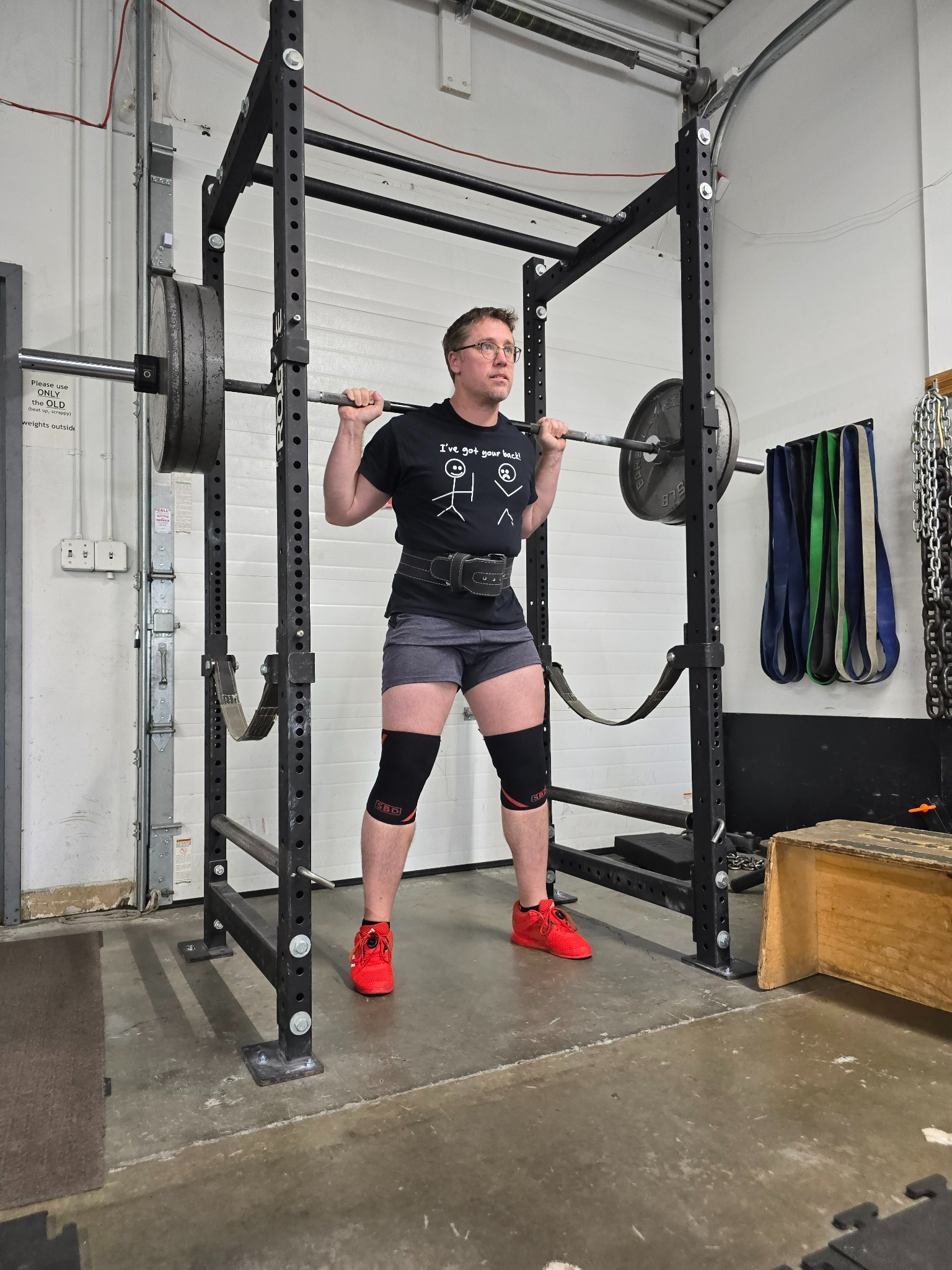
Rehabilitation doesn't have to end with light resistance. When someone's goals require greater strength, progressively heavier training can become an appropriate part of building capacity.
A Clinic-Gym Hybrid Makes Us Better at Both
Having clinicians and coaches under one roof creates another advantage: we get to learn from each other.
Our clinicians spend a lot of time thinking about pain, injury, movement limitations and rehabilitation.
Our coaches spend a lot of time thinking about programming, strength development, exercise progression and performance.
Those perspectives should overlap.
A clinician should understand what we're asking someone to return to. A coach should understand when an exercise needs to be modified and when a problem deserves another look.
Neither side needs to pretend it knows everything.
That collaborative approach has shaped a lot of what Ascent has become. We can move someone toward the professional who makes the most sense for where they are right now, rather than trying to keep every person in the same lane indefinitely.
The Gym Was Always Part of the Plan
When people first walk into Ascent, the gym is hard to miss.
That's intentional.
It represents what we believe healthcare for active people should eventually lead toward.
Yes, we want to help when something hurts.
Yes, there are times when hands-on treatment, focused rehabilitation, physical therapy, chiropractic care or other interventions are appropriate.
But we also want somewhere to go once things start feeling better.
We want to help people move from pain to movement, movement to strength, and strength back into life.
For some people, that journey ends when they're back on the mountain, trail or job.
For others, they discover that they actually enjoy training and want to see how strong they can become.
We're pretty happy with either outcome.
That's why we built a gym inside our clinic.