
.png)



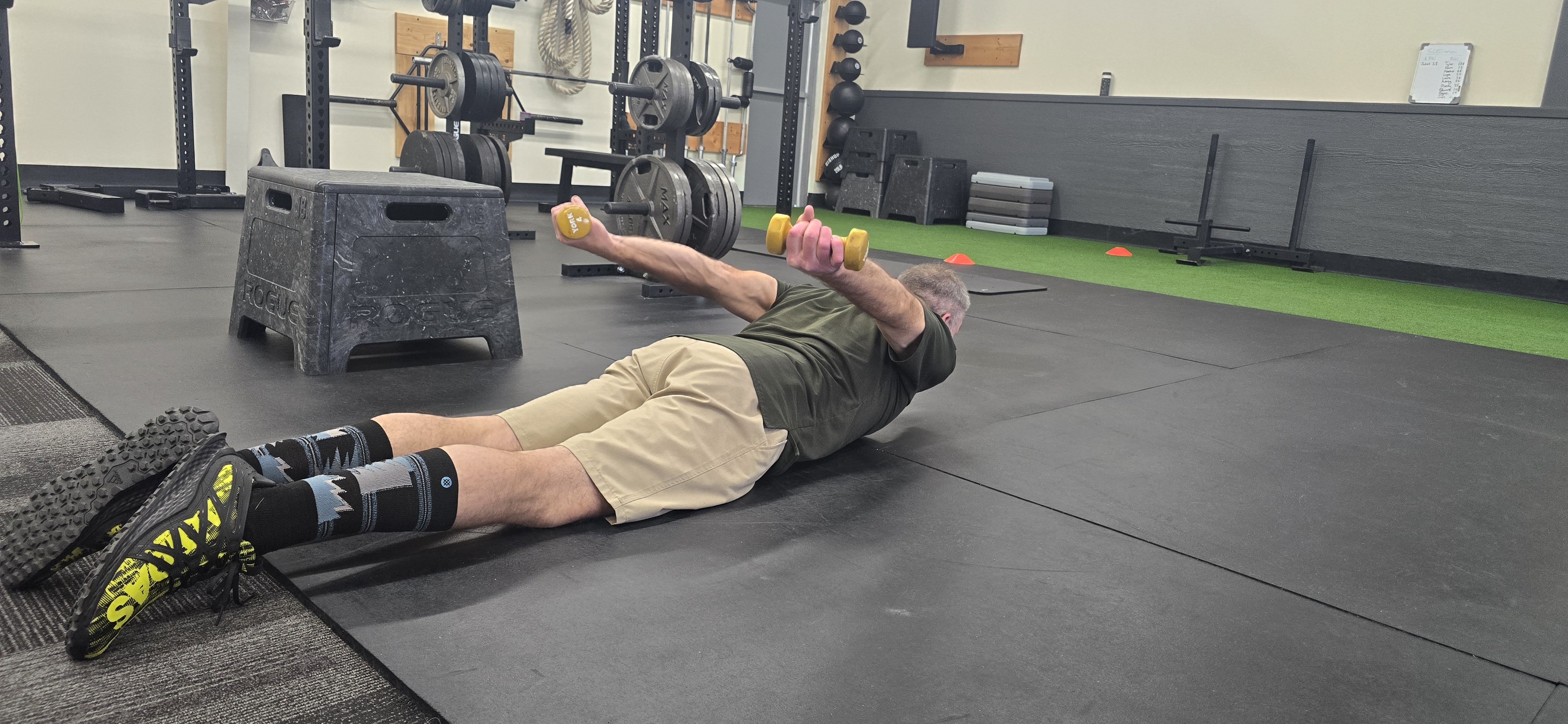

Chronic pain isn't a character flaw.
It's not a weakness.
And it's rarely because you "didn't stretch enough."
Most people dealing with chronic pain have done everything they were told to do—rest, ice, massage, injections, adjustments, physical therapy, mobility work. Some of it helped. Maybe a lot.
But eventually, the pain came back.
That's not necessarily because those treatments failed.
Often, it's because something critical was still missing.
Chronic Pain Isn't Always a Damage Problem — It's Often a Capacity Problem
One of the biggest misconceptions in musculoskeletal care is that persistent pain always means tissue is still injured.
It doesn't.
In many persistent musculoskeletal pain conditions, the amount of pain someone experiences doesn't perfectly match the amount of tissue damage present.
Some people have relatively normal imaging and significant pain. Others have arthritis, disc degeneration, tendon changes, or other findings on imaging and very few symptoms.
Pain is real—but it isn't always a direct measurement of damage.
For many people, part of the problem is capacity.
Capacity is your body's ability to handle what you ask of it. That includes:
- The ability of muscles, tendons, joints, and other tissues to tolerate load
- The ability of the nervous system to tolerate movement and stress without an excessive protective response
- The strength and coordination to control movement
- The ability to recover and adapt to the demands of work, training, recreation, and everyday life
When those demands repeatedly exceed your current capacity, symptoms can persist or return.
So getting out of pain isn't always about finding one more thing to "fix."
Sometimes it's about building a body that can handle more.
Why Passive Care Alone Can Plateau
Let's be clear: hands-on care can be incredibly valuable.
Joint manipulation, manual therapy, soft-tissue work, and other symptom-modifying treatments can help:
- Reduce pain and irritation
- Restore motion
- Improve joint mechanics
- Decrease protective muscle tension
- Make movement more comfortable
These tools can create an important window of opportunity.
But if treatment remains primarily passive, the body may never learn how to own that movement under load.
Pain goes down.
Life feels better.
So you start doing more.
Work gets busy. You shovel the driveway. You hike farther. You get back under a barbell. You spend a weekend chasing salmon—or chasing kids.
And suddenly, you're hurting again.
That doesn't necessarily mean treatment failed.
It may mean your symptoms improved faster than your capacity increased.
The Missing Ingredient: Progressive Strength
Tissues adapt to what we consistently ask them to do.
That means rest can be useful when something is acutely irritated—but rest alone doesn't prepare a tendon, muscle, joint, or nervous system for greater demands.
At some point, we need appropriate load.
Progressive strength-based rehabilitation can help:
- Increase tissue tolerance
- Improve strength and movement control
- Gradually expose the body to previously uncomfortable tasks
- Reduce guarding and fear around movement
- Prepare you for the actual demands of life, work, and recreation
That doesn't mean throwing someone into an intense workout on day one.
Good rehabilitation should meet you where you are.
That might start with breathing, isometrics, basic movement patterns, or light resistance. From there, we gradually increase range, resistance, speed, complexity, or duration as your body demonstrates that it's ready.
The goal isn't simply to perform exercises.
The goal is to adapt.
And adaptation requires:
- Smart progressions
- Appropriate loading
- Clear movement standards
- Gradual exposure
- Good coaching
- Consistency
Over time, yesterday's challenge becomes today's warm-up.
That's capacity.
Why Community and Group-Based Strength Matter
One of the most overlooked parts of recovering from persistent pain isn't purely physical.
It's human.
When you've been hurting for months or years, movement can become something you approach cautiously. You may stop lifting, running, skiing, hiking, or doing other things you enjoy because you're not sure what will set your symptoms off.
A supportive training environment can help change that relationship with movement.
For many people, training around others provides:
- Accountability
- Encouragement
- Coaching
- Social support
- A reason to keep showing up
You also get to see people with different histories, limitations, and abilities working toward their own goals.
The goal isn't to turn rehabilitation into a competition.
It's to make movement a normal part of life again.
And when people enjoy where they train and who they train with, consistency becomes much easier.
That's important because lasting physical adaptation doesn't happen in one appointment.
It happens over weeks, months, and eventually years of continuing to use the capacity you've built.
Where Chiropractic & Physical Therapy Fit In
This is where the clinical side of recovery still matters.
Chiropractic care and physical therapy can help identify and address limitations that make training difficult.
Depending on the person, that might mean:
- Restoring joint motion
- Improving mobility
- Reducing pain or protective muscle tension
- Addressing movement or strength deficits
- Improving coordination and movement efficiency
- Modifying exercise while irritated tissues recover
- Creating a progression back toward normal activity
At Ascent, we don't see clinical care and strength training as competing approaches.
They're part of the same process.
Sometimes you need to clear the runway before you can take off.
But taking off is still the goal.
The objective isn't to make someone dependent on adjustments, manual therapy, or corrective exercises forever.
It's to help them build enough capacity that they can increasingly manage their own health through movement, strength, and activity.
Where Shockwave Therapy Fits — And Where It Doesn't
Shockwave therapy is another tool we use—but it isn't magic, and we don't treat it like it is.
Focused shockwave therapy may be useful for certain persistent tendon and musculoskeletal conditions, particularly when pain or tissue irritability is making progressive loading difficult.
Depending on the condition, shockwave may help influence pain and biological processes associated with tissue remodeling.
But there's an important distinction:
Shockwave doesn't replace rehabilitation.
If we use shockwave to reduce a barrier to movement but never progressively load the tissue afterward, we've missed a major part of the opportunity.
We want to use it strategically so someone can better participate in the work that actually builds capacity.
Think of shockwave as a potential catalyst—not a cure.
What Finally Makes Chronic Pain Change?
There isn't one universal answer to chronic pain.
Different conditions require different approaches, and persistent or changing symptoms deserve an appropriate evaluation—particularly when weakness, numbness, systemic symptoms, significant trauma, or other concerning signs are present.
But for many people with persistent musculoskeletal pain, lasting progress requires moving beyond symptom relief alone.
That means combining the right pieces at the right time:
- Intelligent strength training
- Progressive loading
- Movement and mobility work when appropriate
- Supportive coaching
- Community and accountability
- Strategic hands-on care
- Appropriate rehabilitation
- Modalities such as shockwave when they're actually indicated
The goal isn't to become fearless about pain or blindly push through symptoms.
It's to understand what your body can currently tolerate—and progressively build from there.
Pain isn't always a signal to stop.
Sometimes it's information that helps us decide what needs to change.
If This Sounds Familiar...
Maybe you've tried multiple treatments.
Maybe you feel better for a few days after an appointment, but the same problem keeps returning.
Maybe you've been told to rest, stretch, or avoid certain movements—but no one has shown you how to actually get back to them.
Or maybe you've slowly stopped doing things you love because you're worried about what will happen afterward.
There may be another path forward.
Not one built around endless appointments or chasing temporary relief, but around strength, confidence, movement, and progressively rebuilding what your body can do.
At Ascent Health & Performance, that's the bridge we're trying to build between healthcare and fitness.
Because feeling better matters.
But getting back to your life matters more.