
.png)



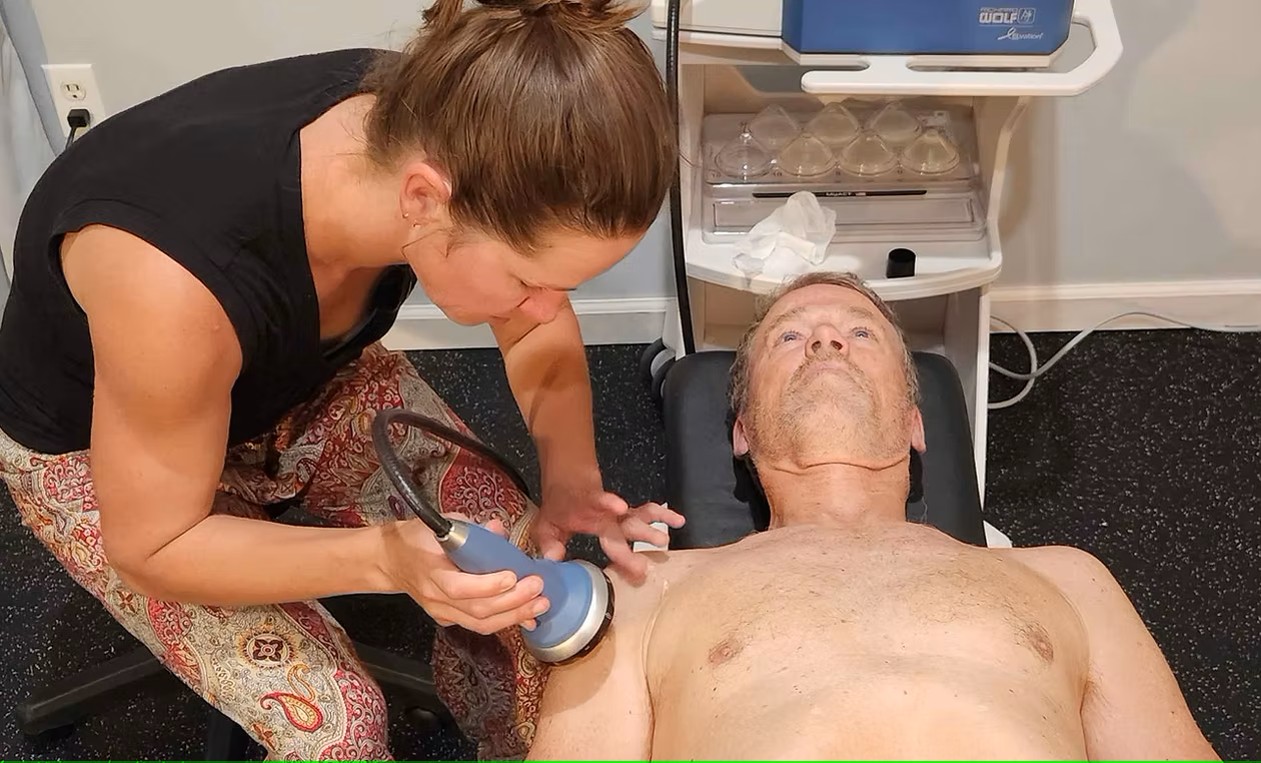

Persistent pain can be frustrating—especially when rest, stretching, or other treatments have not produced lasting improvement. Focused shockwave therapy is a noninvasive treatment that uses acoustic energy to stimulate a biological response within injured or irritated tissue.
At Ascent Health & Performance, we use focused shockwave therapy as one part of a broader recovery plan. It does not replace a thorough evaluation, progressive rehabilitation, or appropriate strength training. Instead, it can help create an opportunity for stubborn tissue to begin moving forward again.
What Is Focused Shockwave Therapy?
Despite the name, shockwave therapy does not deliver an electrical shock. The treatment uses high-energy acoustic waves that travel into a precisely targeted area of the body.
Focused shockwaves can reach deeper tissues while concentrating energy within a specific treatment zone. This allows us to adjust the depth and intensity based on the tissue involved, the condition being treated, and the patient’s comfort.
The goal is not simply to temporarily cover up pain. The acoustic energy is intended to stimulate a healing response within tissue that may have become chronically irritated, slow to recover, or poorly responsive to other conservative care.
How Does It Work?
When focused shockwaves reach the treatment area, they create a controlled mechanical stimulus within the tissue. This may help encourage several useful biological responses, including:
• Increased local circulation
• Stimulation of cellular repair activity
• Remodeling of chronically irritated tissue
• Reduction in pain sensitivity
• Improved tolerance for movement and loading
Most importantly, shockwave therapy can help us make progress with rehabilitation. When pain decreases and the tissue tolerates loading more comfortably, we can begin rebuilding strength, mobility, and capacity more effectively.
What Conditions May Respond to Shockwave Therapy?
Focused shockwave therapy is commonly used for persistent musculoskeletal conditions, particularly those involving tendons, fascia, and areas where soft tissue attaches to bone.
Conditions we may evaluate for shockwave therapy include:
• Plantar fasciitis and chronic heel pain
• Achilles tendinopathy
• Patellar tendinopathy
• Tennis or golfer’s elbow
• Rotator cuff tendinopathy
• Calcific shoulder tendinopathy
• Greater trochanteric pain and gluteal tendinopathy
• Persistent muscle or tendon injuries
• Other chronic areas of soft-tissue pain
Not every painful condition is an appropriate candidate. The first step is determining what tissue is involved, why it remains irritated, and whether shockwave therapy fits the overall treatment plan.
What Does Treatment Feel Like?
During treatment, a handheld applicator is placed over the affected area. You will feel a series of rapid pulses as acoustic energy is delivered into the tissue.
The sensation can range from mild pressure to moderate discomfort, particularly over a sensitive or chronically irritated area. Treatment intensity is adjustable, and we work within a level you can tolerate. A typical session is relatively brief, although the exact treatment time and number of pulses vary by condition.
Some people notice an immediate change in pain or mobility. Others improve gradually over several treatments as the tissue responds and becomes more tolerant of activity.
What Should You Expect Afterward?
Mild soreness or tenderness after treatment is normal and may last for a day or two. Most patients can continue their usual daily activities, although we may temporarily modify heavy training or movements that place excessive stress on the treated tissue.
Shockwave therapy is usually provided as a series rather than a single isolated treatment. The number and spacing of visits depend on the condition, its duration, treatment response, and the demands you want to return to.
We may also recommend avoiding anti-inflammatory medication and icing around the treatment window because inflammation is part of the healing response we are attempting to stimulate. Any medication changes should be discussed with the prescribing healthcare professional.
Shockwave Works Best as Part of a Plan
Shockwave therapy may help stimulate tissue recovery, but it cannot correct every factor that contributed to the problem.
For lasting improvement, treatment often needs to address strength, mobility, movement patterns, training volume, recovery, and the gradual reintroduction of load. That is why we frequently combine focused shockwave therapy with chiropractic care, physical therapy, or progressive exercise.
Our goal is not simply to help an area feel better for a few days. We want to help you rebuild enough capacity to return to the activities that matter to you.
Is Focused Shockwave Therapy Right for You?
You may be a good candidate if you have a persistent tendon or soft-tissue problem that has not improved as expected with rest, exercise, or other conservative treatment.
The best way to know is through an evaluation. We will identify the likely source of your symptoms, screen for reasons shockwave therapy may not be appropriate, and explain whether it belongs in your recovery plan.
If pain has been keeping you from training, working, or enjoying Alaska, schedule an evaluation with Ascent Health & Performance. We will help you understand the problem and determine the most practical path forward.
This article is intended for general educational purposes and is not a substitute for individualized medical advice, diagnosis, or treatment.