
.png)



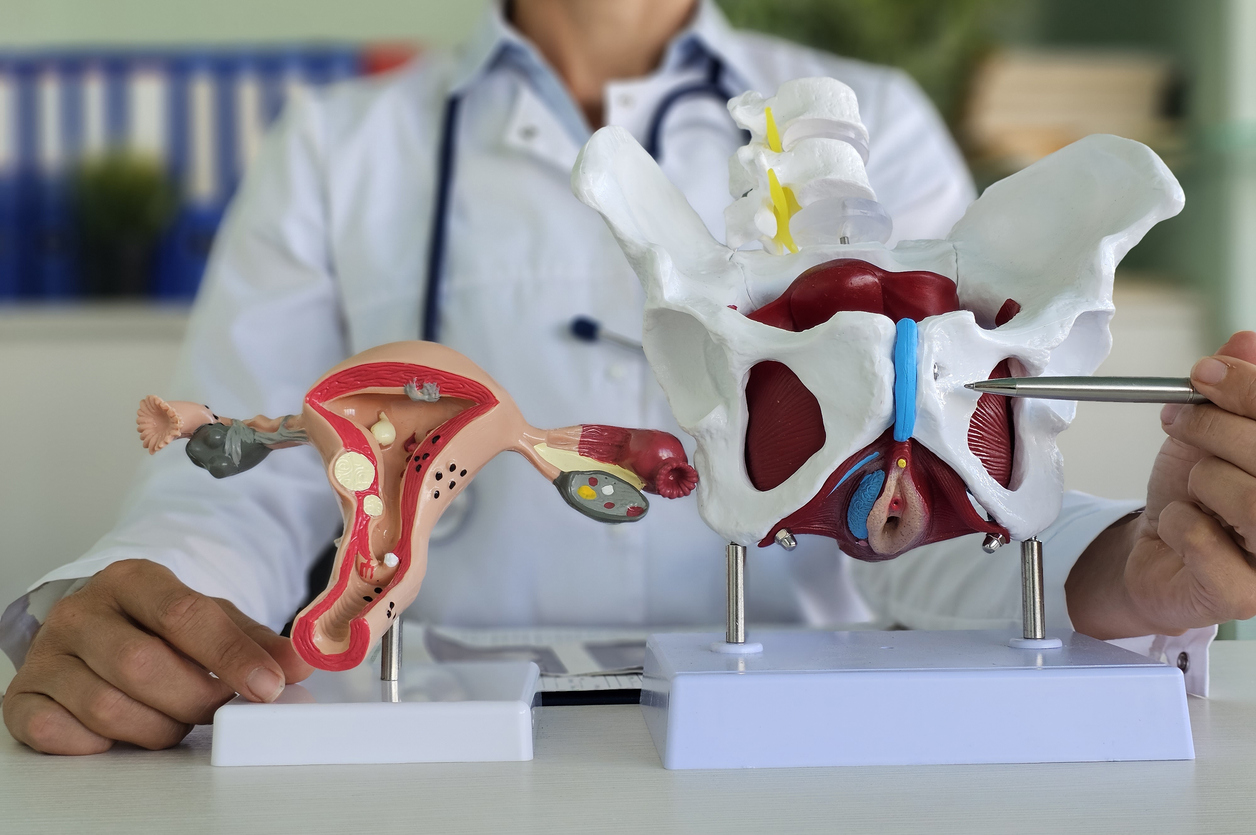

Let’s talk about the pelvic floor.
Yes, that pelvic floor.
It is not always the easiest subject to bring up at a dinner party—or during a routine appointment—but it affects far more people than most of us realize. It also influences much more than bladder control.
Your pelvic floor helps manage pressure, support the pelvic organs, coordinate bowel and bladder function, contribute to sexual function, and stabilize the trunk during movement. It responds every time you breathe, cough, sneeze, lift, run, jump, or carry something heavy.
In other words, it is doing quite a bit more than sitting quietly at the bottom of your pelvis.
From my perspective as a chiropractor, pelvic floor health has become one of those topics that is impossible to ignore once you understand how often it overlaps with low back pain, hip discomfort, pregnancy, postpartum recovery, lifting, running, constipation, urinary leakage, pelvic pain, and return to exercise.
It is also why having a physical therapist with specialized pelvic health training was important to us when we brought Dr. Shreena Chopra onto the Ascent team.
What Exactly Is the Pelvic Floor?
The pelvic floor is a group of muscles and connective tissues that forms a supportive base underneath the pelvis. You can picture it as a muscular hammock—although a smart, responsive trampoline may be a better comparison.
These tissues help:
- Support the bladder, bowel, uterus, and other pelvic structures
- Maintain urinary and bowel control
- Coordinate urination and bowel movements
- Contribute to sexual function
- Manage abdominal pressure
- Work with the diaphragm, abdominal wall, hips, and spinal stabilizers
- Support movement during lifting, running, jumping, and everyday activity
For something this important, most people receive remarkably little education about it.
Many do not learn about the pelvic floor until something stops working the way they expect.
Pelvic Floor Dysfunction Is Not Just a Women’s Issue
Pelvic health is commonly associated with pregnancy and postpartum recovery—and those are important parts of the conversation. Pregnancy, delivery, hormonal changes, and abdominal or pelvic surgery can all affect pelvic floor function.
But women who have never been pregnant can also experience pelvic floor dysfunction.
So can men.
Men may develop pelvic floor symptoms after prostate treatment, pelvic surgery, trauma, chronic constipation, repetitive loading, or persistent pelvic muscle tension. Pelvic floor problems in both women and men can contribute to urinary, bowel, sexual, and pain-related symptoms.
That means pelvic health care is not exclusively postpartum care, and it is not exclusively women’s health.
It is musculoskeletal and neurological care for a region of the body that happens to be unusually private—and therefore frequently ignored.
The Pelvic Floor Is Not Always Weak
Here is one of the biggest misconceptions:
Pelvic floor problem = weak pelvic floor = do more Kegels.
Sometimes weakness is part of the problem. But pelvic floor dysfunction may also involve:
- Excessive muscle tension
- Poor coordination
- Difficulty relaxing
- Reduced endurance
- Delayed muscle activation
- Excessive bracing
- Poor pressure management
- Scar sensitivity
- A combination of weakness and overactivity
A muscle can feel tight and still be weak. It can contract forcefully but fail to relax. It can perform well during an isolated exercise but lose coordination during a cough, heavy squat, run, or bowel movement.
That is why automatically prescribing Kegels is a little like telling everyone with shoulder pain to perform more shoulder shrugs. It might help the right person, but it is not a meaningful assessment or a complete treatment plan.
Kegels—or pelvic floor muscle contractions—have good evidence for certain forms of urinary incontinence. However, they are not appropriate for every pelvic floor condition. When the muscles are already overactive or unable to relax, repeatedly squeezing them may be unhelpful and could aggravate symptoms. The National Institute of Diabetes and Digestive and Kidney Diseases similarly recommends checking with a healthcare professional because pelvic floor exercises are not the right option in every case.
Signs That the Pelvic Floor May Need Attention
Pelvic floor dysfunction does not always announce itself with a neat label. It may show up as:
- Urine leakage with coughing, sneezing, running, or jumping
- A sudden or frequent urge to urinate
- Difficulty starting or fully emptying the bladder
- Bowel leakage or difficulty controlling gas
- Constipation or frequent straining
- Pelvic pressure or heaviness
- A feeling of bulging or reduced pelvic support
- Pain with intercourse
- Pelvic, genital, tailbone, groin, or lower abdominal pain
- Difficulty relaxing the pelvic floor
- Symptoms during or after lifting
- Persistent discomfort during pregnancy or postpartum recovery
- Difficulty returning to exercise after childbirth or pelvic surgery
These symptoms are common enough that people sometimes assume they are simply part of aging, motherhood, menopause, or “what happens after kids.”
Common does not mean inevitable.
It also does not mean someone should be embarrassed to ask for help.
What Jackson Taught Us About Pelvic Floor Care
When Laura and I practiced in Jackson, Wyoming, we referred patients to pelvic floor physical therapist Dr. Cossette Burnham regularly.
It was not a rare, once-a-year referral. Her expertise repeatedly filled a gap that we could recognize but could not appropriately address through chiropractic care alone.
We might be helping someone with low back, hip, sacroiliac, or pubic discomfort when the history revealed urinary leakage, pelvic pressure, pain with intercourse, postpartum symptoms, or difficulty returning to activity. Other patients came in believing their symptoms were “just their back,” when pelvic floor coordination was clearly part of a larger pressure-management and movement problem.
Those experiences changed the way I thought about pelvic health.
They also reinforced something that has shaped how we built Ascent: good care is not about trying to make every problem fit the treatment you happen to provide.
Sometimes chiropractic care is appropriate. Sometimes strength training is appropriate. Sometimes a general orthopedic physical therapy plan is appropriate. And sometimes the person needs a clinician with specific pelvic health training.
Recognizing that distinction is part of responsible care.
Why We Wanted a Pelvic Floor Specialist at Ascent
When we began building a more integrated rehabilitation and performance model in Anchorage, pelvic health was not an optional side service in my mind.
We wanted someone who could help patients bridge the gap between symptoms, rehabilitation, strength, and real life.
Dr. Shreena Chopra brings physical therapy and performance training together, with specialized expertise in pelvic floor rehabilitation. That matters because the end goal is rarely just to perform an isolated contraction on a treatment table.
People want to:
- Pick up their children
- Hike without pelvic pressure
- Run without leaking
- Return to lifting
- Feel comfortable during sex
- Recover confidently after childbirth
- Train without constantly bracing or worrying
- Regain control of bladder or bowel symptoms
- Trust their body again
Pelvic floor rehabilitation should be able to meet someone where they are and help them work toward those goals.
Shreena and Laura will eventually add their own perspectives to this topic—and they are better equipped than I am to take readers deeper into evaluation, pregnancy, postpartum recovery, treatment options, and the realities of pelvic health care.
My perspective is simpler: we saw this need repeatedly in Jackson, we continue to see it in Anchorage, and I wanted Ascent to have someone qualified to address it.
What Does Pelvic Floor Physical Therapy Involve?
Pelvic floor physical therapy is not a generic sheet of Kegels.
An evaluation may consider:
- Symptom history
- Pregnancy and delivery history
- Previous surgery or injury
- Bladder and bowel habits
- Breathing and pressure management
- Hip, pelvic, and spinal movement
- Abdominal wall function
- Strength and coordination
- Muscle tension and relaxation
- Lifting, running, or sport demands
When appropriate—and only with informed consent—a pelvic floor physical therapist may also discuss an internal examination. Patients should understand why any assessment is being recommended, what it involves, and what alternatives are available. They remain in control of the process.
Treatment is individualized and may include education, breathing strategies, relaxation or strengthening, coordination training, mobility work, graded exposure, manual therapy, bladder or bowel habit strategies, and progressive return to exercise.
The goal is not necessarily to make every pelvic floor stronger.
The goal is to make the system work better.
The Connection Between the Pelvic Floor and the Rest of the Body
The pelvic floor does not function in isolation.
It coordinates with the diaphragm above it, the abdominal wall around it, and the hips and spine surrounding it. When you inhale, lift, brace, cough, or land from a jump, pressure moves through this entire system.
This does not mean every case of back pain is secretly a pelvic floor problem. It also does not mean correcting someone’s breathing will magically resolve every pelvic health complaint.
It means we should stop treating the pelvic floor like an unrelated body part.
For someone returning to a barbell, trail running, skiing, hiking, or carrying children, pelvic health rehabilitation should eventually connect to whole-body movement and progressive loading. That is where Ascent’s combined physical therapy, chiropractic, rehabilitation, and performance environment can be especially useful.
You Do Not Have to Wait Until Symptoms Are Severe
People often delay discussing pelvic floor symptoms because they feel awkward, believe nothing can be done, or assume their symptoms are not “bad enough.”
You do not need to wait until leakage prevents you from exercising, pain affects your relationship, or pelvic pressure stops you from doing the activities you enjoy.
A conversation and appropriate evaluation can help determine:
- Whether the pelvic floor is likely involved
- Whether the issue appears related to weakness, tension, coordination, or something else
- Whether pelvic floor physical therapy is appropriate
- Whether medical evaluation or another specialist is needed
- How rehabilitation can connect back to exercise and daily activity
Pelvic health is health. It deserves the same straightforward, thoughtful conversation we would give a knee, shoulder, or low back.
It may just require slightly fewer jokes at the dinner table.
The Bottom Line
The pelvic floor is not simply a muscle you should squeeze more often.
It is part of a coordinated system responsible for support, pressure management, bladder and bowel control, sexual function, and movement. Dysfunction can involve weakness, excessive tension, poor relaxation, impaired coordination, or several of these factors at once.
Our experience referring patients to Dr. Cossette Burnham in Jackson showed us how valuable specialized pelvic floor physical therapy can be. It is one of the reasons we were excited to bring Dr. Shreena Chopra’s pelvic health expertise into Ascent.
If pelvic floor symptoms are limiting your exercise, comfort, confidence, or daily life, you do not have to simply live with them—and you do not have to figure out the right exercises on your own.
Sources
- NIDDK: Kegel Exercises and Pelvic Floor Muscle Training
- NIDDK: Symptoms and Causes of Bladder Control Problems
- Cochrane Review: Pelvic Floor Muscle Training for Urinary Incontinence in Women
- Pelvic Floor Physical Therapy in the Treatment of Pelvic Floor Dysfunction
- Pelvic Floor Physical Therapy for Pelvic Floor Hypertonicity
- Treatment Algorithm for High-Tone Pelvic Floor Dysfunction