
.png)





Elbow pain has a way of showing up in everyday tasks. Gripping a coffee cup, turning a wrench, carrying groceries, typing, lifting weights, casting a fishing rod, or holding a child can suddenly become uncomfortable.
Although many people refer to almost any pain around the elbow as tennis elbow, several different tissues can produce symptoms in this area. The location of the pain, how it began, and which movements provoke it help us determine whether the problem involves a tendon, muscle, ligament, joint, bursa, or nerve.
That distinction matters. An irritated tendon should not be treated exactly like an acute ligament sprain, nerve irritation, or pain referred from the neck.
Lateral Elbow Pain: Tennis Elbow
Pain on the outside of the elbow is commonly called tennis elbow. The clinical term is lateral elbow tendinopathy or lateral epicondylitis.
Despite its name, you do not have to play tennis to develop it. We frequently see lateral elbow pain in people whose work, training, hobbies, or household tasks involve repeated gripping and wrist extension.
Common aggravating activities include:
- Lifting an object with the palm facing down
- Gripping tools, weights, or handlebars
- Shaking hands
- Opening jars
- Using a computer mouse
- Performing rows, pull-ups, deadlifts, or carries
- Repetitive construction, mechanical, or yard work
The common wrist extensor tendons attach near the bony prominence on the outside of the elbow. When the amount or intensity of activity exceeds the tendon’s current capacity, the area can become painful and less tolerant of load.
“Tendinitis” is often used to describe this condition, but persistent cases are not always driven by active inflammation alone. The tendon may instead be dealing with longer-term changes in its structure and load tolerance. That is one reason simply resting until the pain settles does not always solve the problem.
Medial Elbow Pain: Golfer’s Elbow
Pain on the inside of the elbow is commonly called golfer’s elbow, or medial elbow tendinopathy. This involves the shared attachment of muscles responsible for wrist flexion and forearm pronation.
Like tennis elbow, golfer’s elbow is not limited to golfers. It can affect climbers, throwers, lifters, tradespeople, and anyone repeatedly gripping or flexing the wrist under load.
Symptoms may be aggravated by:
- Carrying or gripping heavy objects
- Pulling movements
- Throwing
- Golf swings
- Rock climbing
- Wrist curls
- Repetitive use of hand tools
- Pressing exercises with poor wrist control
Pain is typically felt around the bony prominence on the inside of the elbow and may extend into the forearm. Resisted wrist flexion, forearm rotation, or gripping may reproduce the complaint.
Because the ulnar nerve also travels near the inside of the elbow, medial elbow pain accompanied by numbness or tingling requires a closer look.
Elbow Sprains and Muscle Strains
Not all elbow pain develops gradually. A fall, sudden pull, awkward lift, collision, or forceful throw can injure the muscles or ligaments surrounding the joint.
A strain involves a muscle or tendon. A sprain involves a ligament that helps stabilize the elbow. Symptoms can include localized tenderness, swelling, bruising, pain with movement, or a sense that the elbow is unstable.
Mild injuries often improve with temporary activity modification and a progressive return to movement. More significant trauma may require imaging or referral—particularly when there is substantial swelling, deformity, loss of motion, instability, or difficulty using the arm.
The goal is not simply to label every traumatic elbow injury a “sprain-strain.” We want to understand which movements are limited, which tissues appear involved, and whether the elbow remains stable enough for conservative care.
Other Common Causes of Elbow Pain
Distal biceps or triceps tendon irritation
The distal biceps tendon attaches near the front of the elbow and contributes to bending the elbow and rotating the palm upward. The triceps tendon attaches at the back and straightens the elbow.
These tendons may become irritated through repetitive pulling, pressing, throwing, or sudden changes in training volume. Pain at the front of the elbow during curls or palm-up lifting may suggest distal biceps involvement. Pain at the back of the elbow during pressing or forceful extension may point toward the triceps tendon.
A sudden pop, rapid bruising, visible change in the muscle, or significant loss of strength should be evaluated promptly for a possible tendon tear.
Olecranon bursitis
The olecranon bursa is a small fluid-filled structure over the point of the elbow. It can become irritated by a direct impact, prolonged pressure, infection, or certain medical conditions.
Bursitis often creates visible swelling at the back of the elbow. It may feel like a soft pouch and can become painful when leaning on the arm or bending the elbow.
A swollen elbow that is red, hot, increasingly painful, or accompanied by fever needs medical evaluation because infection must be ruled out.
Ulnar nerve irritation and cubital tunnel syndrome
The “funny bone” sensation comes from the ulnar nerve as it passes behind the inside of the elbow. Repeated elbow bending, direct pressure, prior injury, or reduced space around the nerve can irritate it.
Symptoms may include:
- Numbness or tingling in the ring and little fingers
- Aching along the inside of the elbow
- Symptoms that worsen with prolonged elbow flexion
- Hand weakness or reduced coordination
- Difficulty gripping or frequently dropping objects
These symptoms should not automatically be treated as golfer’s elbow. Tendon loading alone will not address a meaningful nerve entrapment.
Joint irritation and loss of motion
Elbow joint irritation can follow trauma, repetitive loading, arthritis, or a previous fracture or dislocation. Some people primarily notice stiffness rather than sharp pain, especially when attempting to fully straighten or bend the arm.
Mechanical catching, locking, or a persistent block in motion may warrant imaging or orthopedic evaluation.
Sometimes the Elbow Is Not the Only Problem
Pain may be felt at the elbow even when the contributing problem is not limited to the elbow.
The neck and nerves of the upper extremity can refer symptoms into the arm. Shoulder or scapular limitations may also change how force is distributed during lifting, throwing, gripping, or repetitive work. At the other end of the chain, wrist mobility and grip strategy can alter the demand placed on the forearm tendons.
This does not mean every sore elbow requires treatment everywhere. It means the examination should extend beyond the exact point of pain when the history or movement findings suggest a broader contributor.
Our chiropractic care may include evaluation of the elbow along with the wrist, shoulder, upper back, and neck. Joint treatment and manual therapy can help address relevant restrictions or painful movement, while exercise builds the capacity needed to maintain the improvement.
How We Evaluate Elbow Pain
A useful elbow assessment starts with the story behind the symptoms:
- Did the pain begin suddenly or build gradually?
- Was there a recent increase in lifting, gripping, throwing, or work volume?
- Where is the pain located?
- Is there numbness or tingling?
- Which tasks have become difficult?
- Does the elbow feel stiff, weak, or unstable?
The physical examination may include elbow and wrist range of motion, localized palpation, resisted muscle testing, grip strength, ligament testing, and neurological screening. We may also evaluate the neck, shoulder, scapula, and wrist when those regions could be affecting the complaint.
Imaging is not necessary for every case of elbow pain. It becomes more relevant when we suspect a fracture, substantial tear, arthritis, loose body, instability, or another condition that would change the treatment plan.
Treating the Irritated Tissue—and Rebuilding Its Capacity
Modify the aggravating load
Complete rest is rarely the long-term answer for an overuse problem. However, continuing to perform the same painful activity at the same volume may not allow the area to settle.
The first step is often adjusting the load. That could mean temporarily reducing training volume, changing grip position, modifying a work task, or selecting a variation that produces less pain.
The goal is to find the amount of activity the elbow can currently tolerate and build from there.
Progressive strengthening

Exercise is central to the rehabilitation of most elbow tendinopathies. Early exercises may use isometric contractions or controlled wrist movements. As tolerance improves, loading can progress through a larger range of motion and eventually include heavier gripping, carrying, pulling, pressing, or sport-specific work.
For lateral elbow pain, treatment commonly includes progressive wrist-extension loading. Medial elbow pain may require wrist-flexion and pronation work. Grip endurance, forearm rotation, and shoulder or scapular strength may be added when testing identifies a relevant deficit.
Our physical therapy services are designed to connect symptom management with the strength and movement demands of work, training, and recreation. A person trying to return to desk work needs a different endpoint than a climber, mechanic, competitive lifter, or throwing athlete.
We may also use exercises from our rehabilitation video library to reinforce technique and make the home program easier to follow.
Manual therapy and joint care
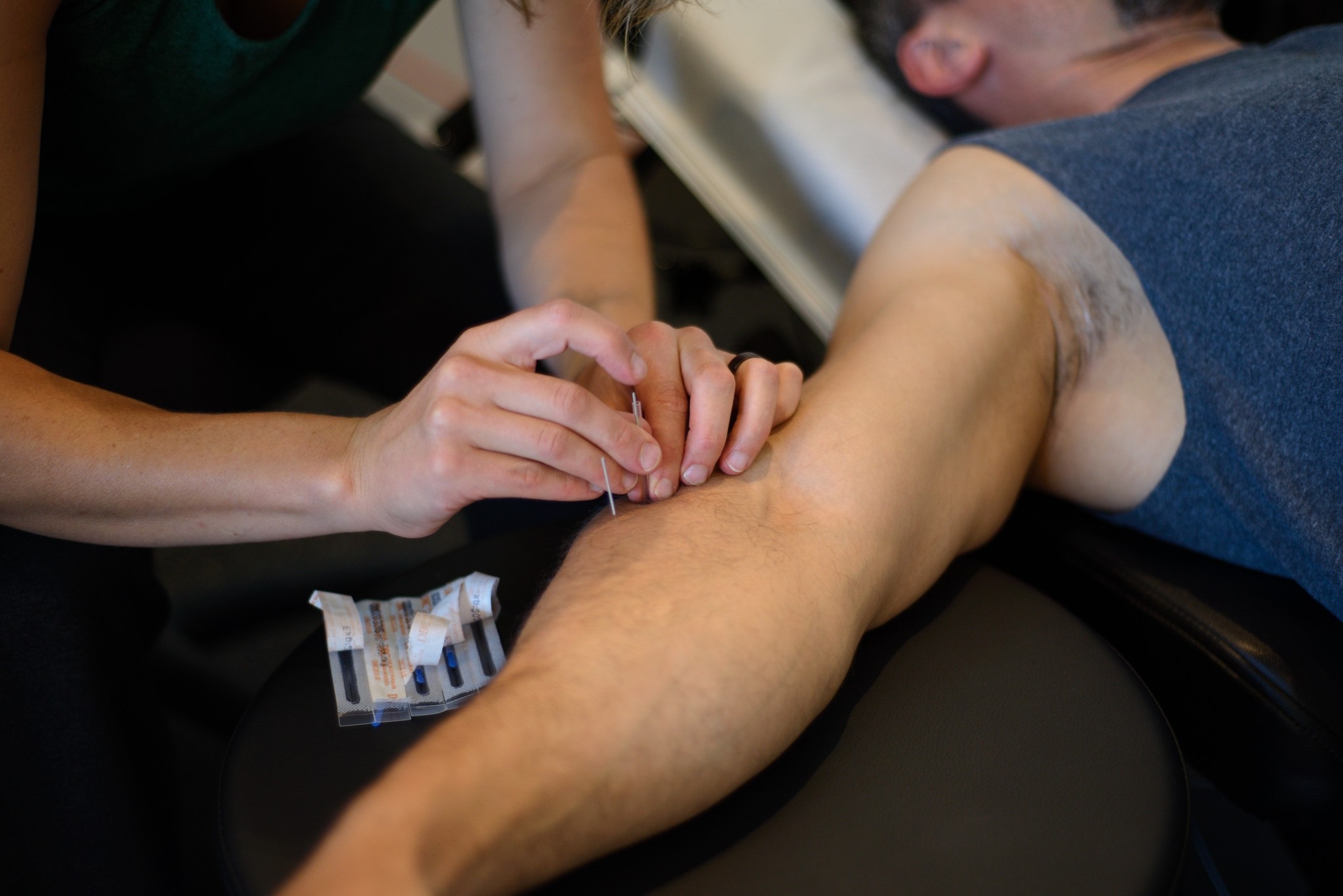
Manual therapy may help reduce pain, improve motion, and make exercise more comfortable. Depending on the examination, treatment might address the forearm muscles, local tendon region, elbow joint, wrist, shoulder, or neck.
Manual care can create a useful window for movement, but it does not replace progressive loading. The best plan usually pairs symptom-modifying treatment with exercises that improve the tissue’s long-term capacity.
Focused shockwave therapy
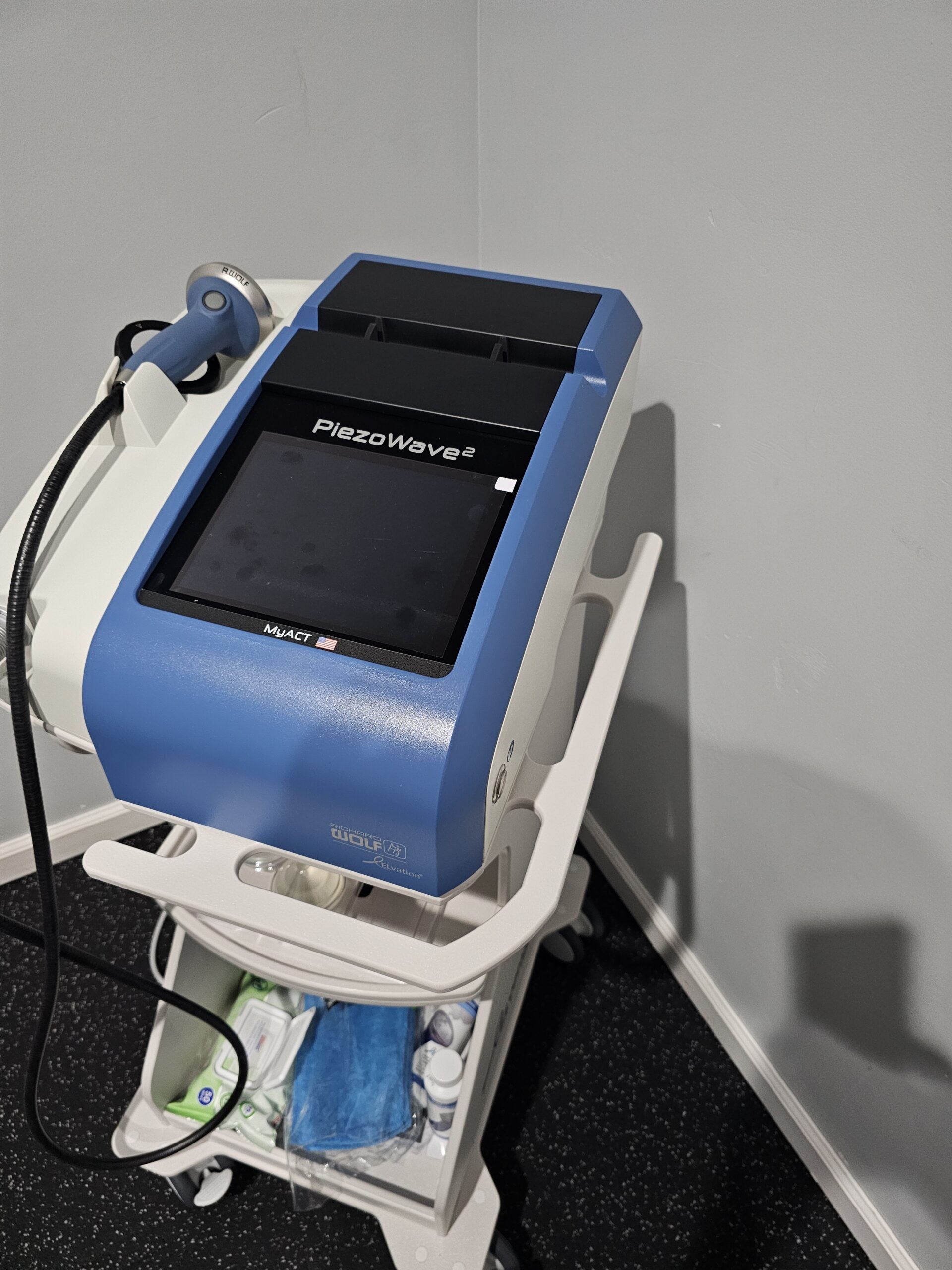
Focused shockwave therapy may be an option for persistent medial or lateral elbow tendinopathy, particularly when the problem has not responded adequately to appropriate activity modification and rehabilitation.
Shockwave delivers mechanical energy to a targeted tissue. Research on chronic lateral elbow tendinopathy suggests it may improve pain and function for some patients, although results vary and it is not appropriate for every type of elbow pain.
At Ascent, shockwave is not used as a stand-alone answer or applied simply because an elbow hurts. We first determine whether the presentation behaves like a tendon problem and then pair treatment with a plan to progressively reload that tendon.
When Should Elbow Pain Be Evaluated?
Consider an evaluation when:
- Pain persists despite reducing the aggravating activity
- Grip strength is noticeably declining
- Symptoms repeatedly return when you resume training or work
- You cannot fully bend or straighten the elbow
- Numbness or tingling extends into the hand
- The elbow feels unstable
- Pain is interfering with sleep or routine tasks
More urgent evaluation may be appropriate following a major injury, a sudden pop with bruising or weakness, obvious deformity, severe swelling, a locked joint, progressive neurological symptoms, or redness and warmth accompanied by fever.
Treat the Elbow You Have, Not Just the Diagnosis
Two people can both arrive with “tennis elbow” and require different plans. One may have a recent spike in gripping volume and need straightforward tendon loading. Another may have persistent weakness, restricted wrist motion, or shoulder-control deficits. A third may not have tennis elbow at all—the symptoms may be coming from a nerve, the joint, or the neck.
Effective care starts by identifying what is painful, what is loading it, and what the arm needs to do again. From there, treatment can combine the appropriate hands-on care, rehabilitation, and loading progression rather than relying on rest or temporary pain relief alone.